By Roy Bloom, CJF APF-I
- Always wear your safety glasses. You are striking steel against steel and working with hot material. Anything can happen, so be safe.
- Always strike the tool in the center of the striking surface. Striking off center or on the edge will cause breakage and possible injury.
- Always strike the tool with the round face of your hammer. Striking with the flat face causes deflection off the rounded surface of the tool. The round face of your hammer produces a solid hit.
- Always pritchel at a black heat. This allows you to shear the material and avoid heat buildup in the pritchel. You will get much longer life from your pritchel and better nail holes.
- Always maintain your tools. If your tool should mushroom on the struck end, grind off the mushroomed area. If the working end should deform for any reason, regrind to the proper size and shape. Do not overheat.
- Never let the working end of your tool get too hot. Allowing your tools to remain in hot material too long will create a heat buildup in the working end of the tool that will destroy the heat treat and hardness of the tool. The result will be deformed working ends. This is especially critical with the forepunch and drift.
- Never put the tools in the fire to adjust. Excessive heat will destroy the heat treating and render the tool useless. Excessive heat will also destroy the weld on some tools and cause the weld to crack. (An exception would be tong adjustment and pritchels which can take some heat).
- Never quench your tools in water. If your tools get hot they should be allowed to air cool. In normal work we recommend that you dip your tools in a hoof packing formula to provide cooling and lubrication.
- Never quench your tongs in water. If you make adjustments to your tongs do not quench them. Allow them to air cool before you use them. In normal work, you can quench them in water provided there is no color in the tong.
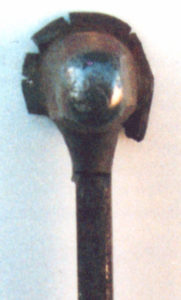
- This steel handled bob punch needs immediate dressing of the struck end. Never let your tool reach this stage before dressing. Notice the missing pieces. You’ll need a full suit of armor to protect yourself if you let your tools get to this point!
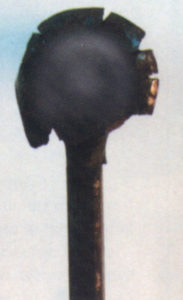
- From struck end you can see again the dangerous situation that has developed and needs immediate attention. The struck ends of these tools are softer to avoid damage to your hammers, but must be dressed on a regular basis.
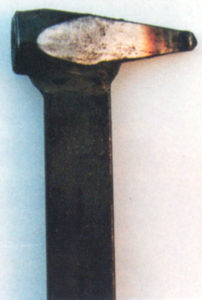
- This punch has been in hot material for too long, resulting in the heavy coloration seen here. Get your tools in and out of the material quickly and don’t allow this kind of heat buildup. The damage that results is because of misuse, not because the tool is defective.
Roy Bloom, CJF APF-I
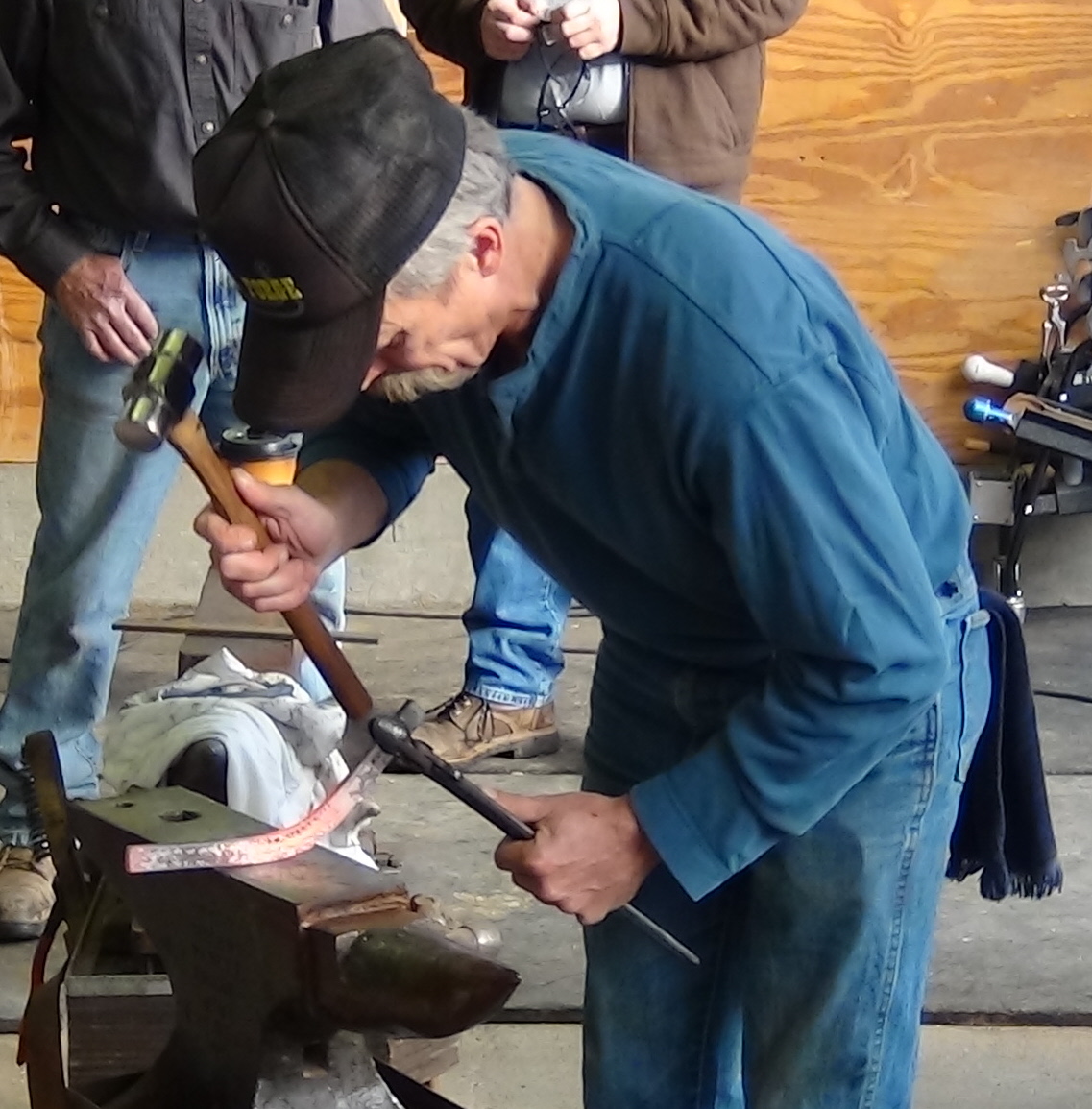 Roy Bloom has been shoeing horses since 1973. He has been a member of the American Farrier’s Team on two different occasions and for many years served as the manager of the team. Roy has always been willing to share the extensive knowledge he’s gained over the years with members of the farrier industry. In addition to his farrier background, he developed a strong interest in blacksmithing and tool making and for many years has been manufacturing a broad range of farrier and blacksmith tools. He also has a fully equipped shop and the ability to do a wide variety of ornamental and artistic work. Roy’s work as a clinician has earned him the Educator of the Year Award from the AFA and a position in the Horseshoer’s Hall of Fame.